
Author: dfantin
-
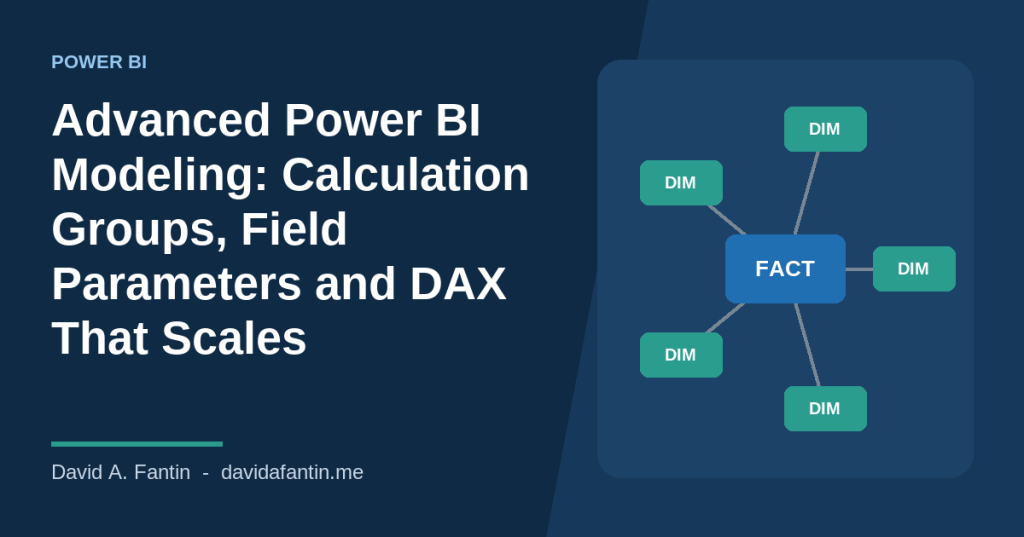
Advanced Power BI Modeling: Calculation Groups, Field Parameters and DAX That Scales
Most Power BI models fail at scale for the same three reasons: a shape that is not a star schema, measures copied dozens of times, and reports that need a new page for every metric. Calculation groups, field parameters and a few DAX disciplines fix all three.
-
SSRS Is Not Dead: Where Paginated Reports Still Beat Power BI Visuals
Interactive dashboards did not replace the invoice, the statement or the regulatory filing. Here is where SQL Server Reporting Services and Power BI paginated reports still win, how to decide, and how to migrate without losing the pixel-perfect output your auditors expect.
-
Beyond the BI Tool: Custom Dashboards with D3, Node.js, Tailwind and Python
Sometimes the packaged BI tool is the wrong shape: a customer portal, a 50-inch operations wall, a visualization no chart library draws. Here is a reference architecture for custom dashboards with HTML5, CSS3, Node.js, Tailwind, D3 and Python, and the rules for deciding when to build one.
-
OLTP vs OLAP: Designing Models That Serve Transactions and Analytics Without Compromise
The same SQL Server cannot be tuned for 2,000 writes a second and a ten-table aggregate at once. Understanding why OLTP and OLAP pull in opposite directions is the key to designing both well, and to knowing when columnstore, mirroring or a lakehouse is the right bridge.
-
Dimensional Modeling in 2026: Kimball Still Wins, and Where It Needs Help
Lakehouses, Direct Lake and AI agents did not retire the star schema; they made it more important. What still holds from the Kimball toolkit, what has changed, and the handful of modern additions a dimensional model needs today.
-
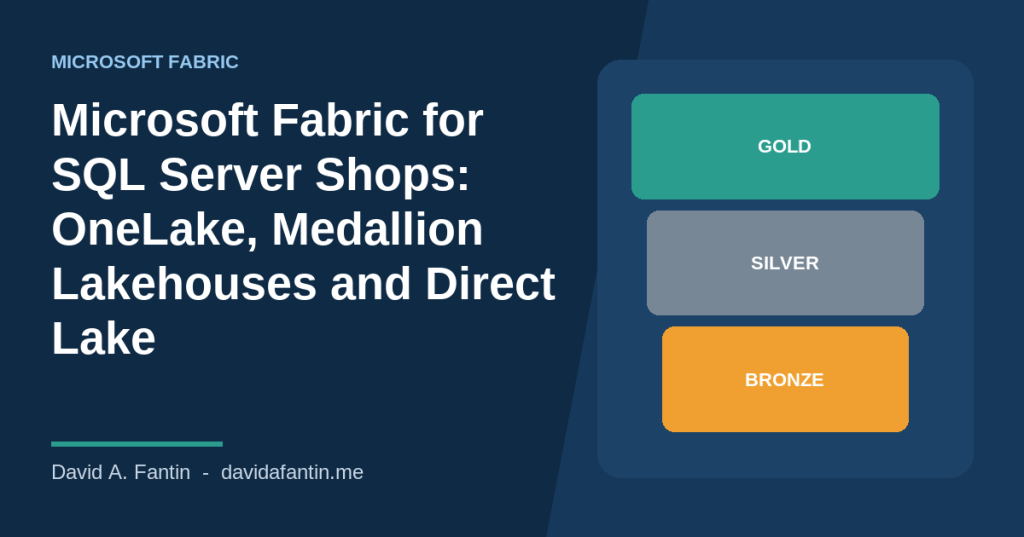
Microsoft Fabric for SQL Server Shops: OneLake, Medallion Lakehouses and Direct Lake
If your estate is SQL Server, SSIS and Power BI, Fabric is less a migration than a reorganization: one storage layer, familiar T-SQL, and a semantic model that reads the lake directly. What to adopt first, what to leave alone, and the traps.
-
Azure Data Factory to Fabric Data Factory: Pipelines That Survive Change
Microsoft calls Fabric Data Factory the next generation of Azure Data Factory. The concepts carry over; the operating habits that make pipelines survive source changes, failed runs and staff turnover are what most teams are missing. Here they are.
-
Prefect + dbt: Code-First Orchestration and Transformation for Small Data Teams
A two-person data team can run a tested, scheduled, observable analytics stack with two open-source tools: Prefect to orchestrate Python, dbt to transform in SQL. The division of labor, a working layout, and the places teams get it wrong.
-
What Generative AI Actually Changes in BI: Copilot, Data Agents and the Semantic Layer
Generative AI does not remove the need for data modeling; it raises the cost of skipping it. A grounded look at what Copilot in Power BI and Fabric data agents do today, what they need from your data, how the analyst’s job shifts, and what to do in the next 90 days.
-
Data Governance for Mid-Size Companies: RLS, Lineage and Quality Tests You Can Run Monthly
Governance programs fail in mid-size companies because they are designed for large ones. Here is a governance cadence a two-person data team can keep: dynamic row-level security, lineage you can show, quality tests that run every load, and a one-hour monthly review.

